May 2026 Book Recommendation
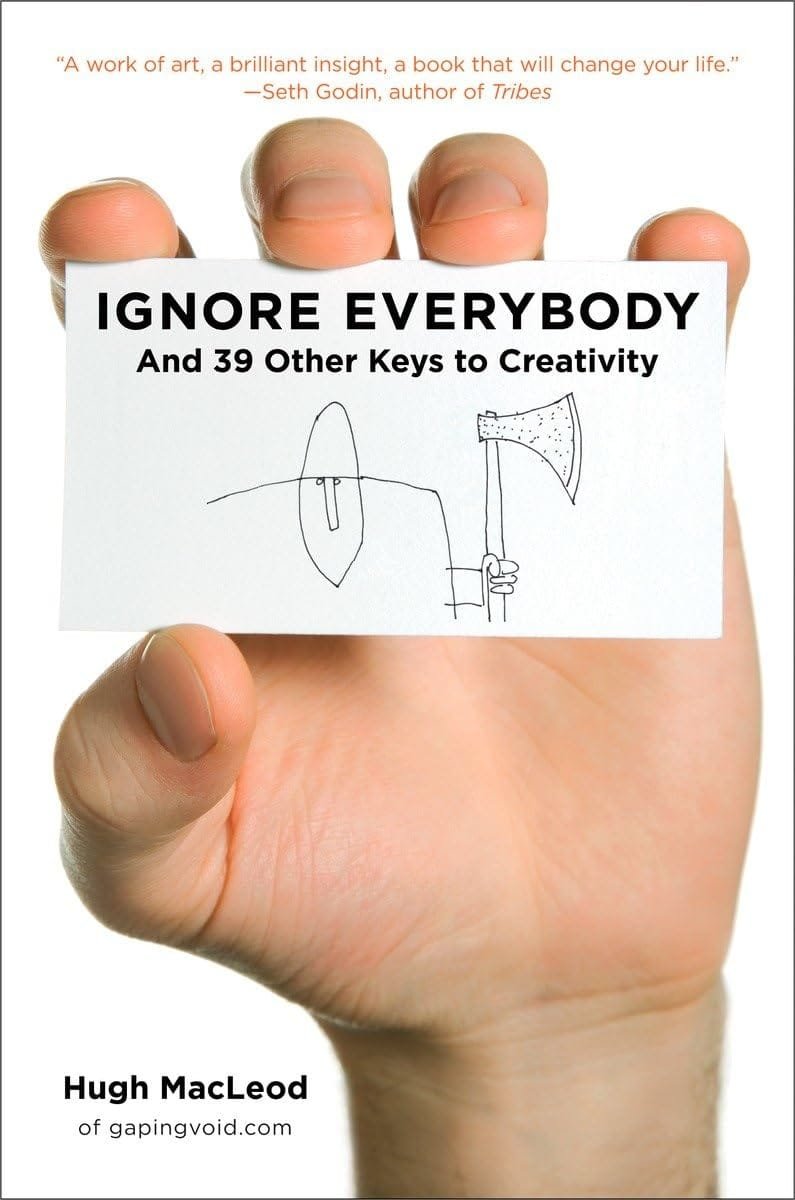
Last month I recommended a book by a musician, now I want you to read the wise words of a cartoonist.
Yes, a cartoonist because many cartoonists deal with the same issues writers face and one of the biggest issues is this: Everyone has an opinion about your writing.
And I mean. Everyone. Your family, your neighbors, new acquaintances, old acquaintances, your friend’s five year old niece (okay that may be a stretch, unless you write pictures books and then well…kids have LOTS of opinions).
My point is opinions are fine. Opinions are everywhere. Everyone has opinions. Especially about what you should write, how you should write, whether your work is ‘good’ or not. Fine. Still not dangerous.
What’s dangerous? Listening to them.
That is the quietly radical rallying cry at the heart of this month’s pick: Ignore Everybody: And 39 Other Lessons for Creativity by Hugh MacLeod.
MacLeod is a cartoonist and creative thinker who drew his cartoons on the backs of business cards for years. He’s gained a hard won philosophy about creativity that is blunt and surprising. Especially for writers.
Here are three things from this book that may free you creatively.
1. Your Day Job Is Not the Enemy
Every writer dreams of the day they can quit their job and write full-time. That’s the goal, right?
Well…maybe not. MacLeod says.
Here’s why: The moment you have to earn a living from your words, you may start making subtle, unconscious concessions that corrupt your work. You may start solely writing for the market or softening your edges to become generically bland.
Money becomes more important than the work itself. You stop being true to your voice and your vision and write what you hope is saleable.
However, the day job can buffer this slow decline. It can give you something priceless: creative sovereignty. When your rent doesn’t depend on your manuscript, you’re free to write what you want, learn and grow and experiment.
MacLeod calls this “keeping the sex in the relationship.” The writing stays electric because it isn’t obligated to perform.
This doesn’t mean you should never pursue writing full-time. It means the pressure to monetize too soon can kill the very thing that makes your writing worth reading.
Protect the work before you try to sell it.
2. You can kill an idea by sharing it too soon
That new idea that’s buzzing inside you? The one that makes you feel alive? The idea that makes everything feel possible?
Put it away and don’t tell anyone about it.
Yes, really.
Ideas are fragile things, especially in their early stage. They’re not strong enough to combat other people’s doubts or indifference. Enthusiasm can be just as deadly.
Wait until the idea is ready. You’ll know it is when it can defend itself, it doesn’t wither from a careless comment or a raised eyebrow. It stands on its own.
Until that moment comes, protect it with your silence.
3. Stop Trying to Sound Like Someone Else
Want to end your writing career before it even begins?
Focus on sounding like everyone else. Yes, even your heroes (especially them).
The world doesn’t need someone hiding in imitation (we have plenty). The world needs someone courageous enough to be themselves. Someone like you. Someone with your history, your specific viewpoint.
MacLeod calls this ‘singing in your own voice’ and it’s the only sustainable creative advantage you have.
The writers we remember aren’t the ones who mastered imitation. They’re the ones who knew when to stop.
Ignore Everybody is a short book with a powerful message.
The title is just the beginning.
Get your copy – Retailers link https://books2read.com
Get your copy – Public library link https://search.worldcat.org/