June 2026 Book Recommendation
Writers have been taught that to be tough one must grit your teeth, push through burnout, hit deadlines no matter the cost to your health or family and smile even when you’re dying inside.
It sounds admirable. It sounds like discipline. It’s a sign of being tough.
However, according to performance scientist Steve Magness, that belief is mostly wrong.
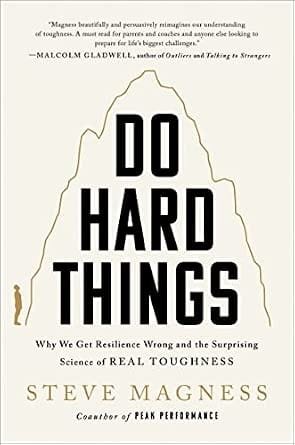
Get ready for some crucial lessons from an Olympic coach in this month’s pick: Do Hard Things: Why We Get Resilience Wrong and the Surprising Science of Real Toughness.
You’ll gain insights from someone who’s spent his career studying what actually makes people resilient under pressure.
What he’s discovered and shares in this book upends the old bulldoze-through-it model that ends up breaking people more than building them up. Real toughness isn’t about ignoring, pushing down, or denying discomfort, it’s about having the courage to face it honestly. To learn how to make thoughtful choices instead of desperate ones.
Here are three things from this book that may help toughen you up in a way that will keep you more resilient than you ever thought you could be.
1. Stop Pretending You’re Fine
That rejection? The fiftieth one? That beloved book that isn’t selling as well as you’d hoped? The manuscript that isn’t working? How do you feel?
Too many people will say ‘they’re fine, they’re okay’ they won’t allow themselves to feel the sting of the above situations. They won’t let themselves look at things honestly.
But according to Magness real toughness starts with facing reality. Don’t flinch. Feel.
Feeling may unlock a key signal you’ve been ignoring. The book that’s not selling, are you so busy looking at data daily instead of working on your next project? Is that manuscript really not working or are you just tired? Are these rejection a sign to look at a new market? You can’t answer any of these questions if you won’t look.
Your feelings are data. Learn how to read them before you decide what to do next.
2. Respond. Don’t React.
When something doesn’t happen as expected– a missed page count quota, an editor’s terse review—many people succumb to an urge.
The urge to quit a project, to defend themselves against criticism.
However, Magness points out that this ‘urge’ is not the decision. There’s a gap between the two.. The untrained writer reacts instantly. The tough one notices the urge, names it, and creates just enough space to choose on purpose.
That pause might be five seconds. It might be a night’s sleep before you answer the email. It doesn’t need to be long. It only needs to exist.
Recognize the urge…wait…give yourself time to make a decision.
3. Confidence Is Earned, Not Performed
Ever been told to “act like a bestselling author”? Pretend to write your glowing reviews? Practice your signature? Fake it till you make it even if you haven’t written one word yet? Project the right image and soon you’ll believe in yourself?
Magness knocks this belief down hard. False bravado, he says, is brittle. It cracks the moment reality pushes back. The confidence that actually holds is slowly built through evidence.
I’ve seen this happen, I’ve lived it. Putting on a persona can help only if it leads to action. Finishing a story, a novel, a poem when I didn’t think I could gave me more confidence than pretending ever did. Doing an action teaches you more than thinking about it.
You don’t need to feel like a great writer to become one. You need to do the actions of a great writer and that means having something to point to–a track record. Evidence of showing up and doing the work, despite your doubts and fears. Even if it’s only a page a day or a paragraph.
Confidence is built on your daily, weekly, monthly actions. Your record. Everything else is just performance.
Don’t be fooled.Do Hard Things isn’t a book about athletes. It’s recognizing what to do with yourself when something is hard and knowing you have the tools to deal with it.
Get your copy – Retailer link Bookshop.org
Get your copy – Public library link https://search.worldcat.org/