October 2026 Book Recommendation
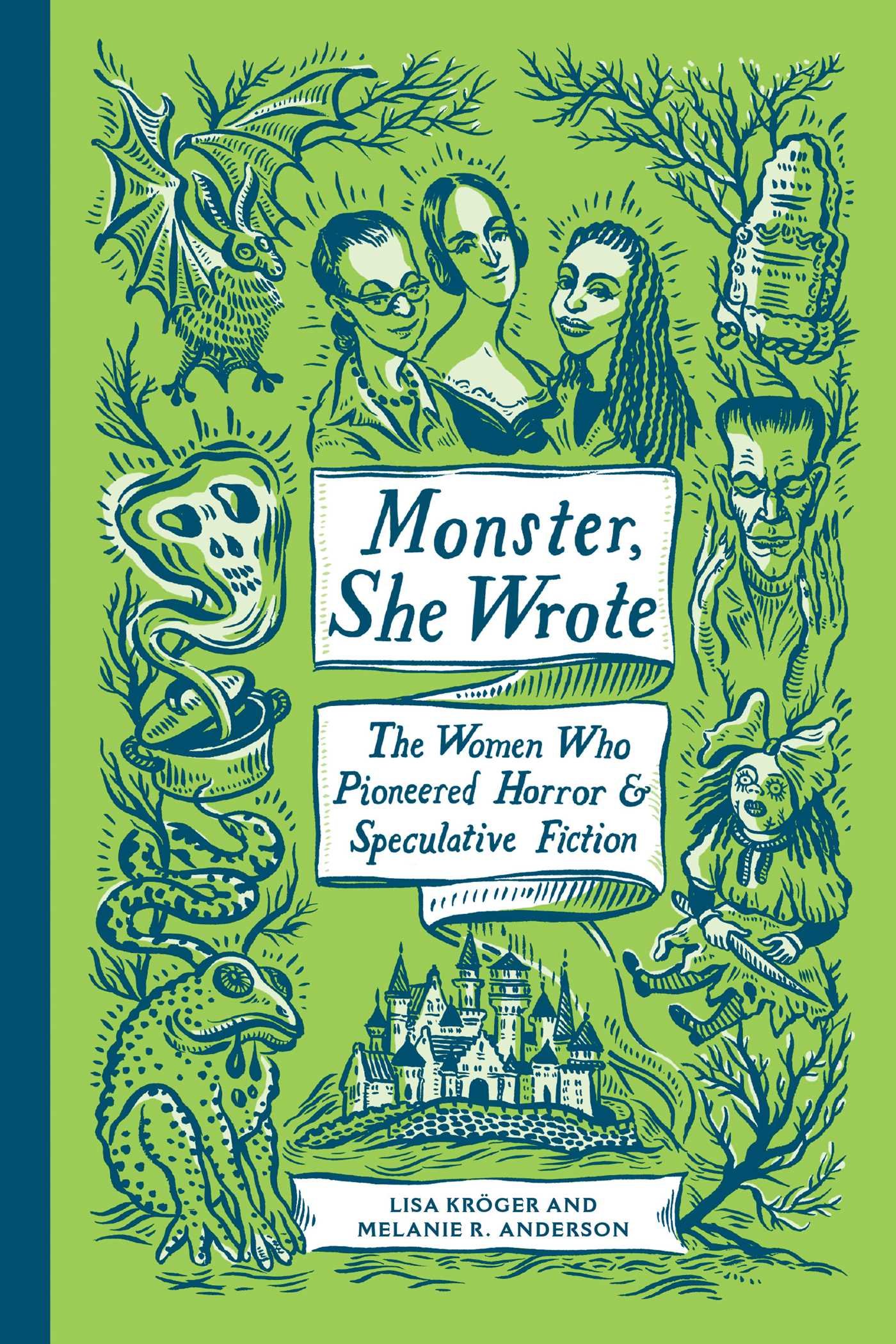
Get ready to be introduced to more than a hundred authors and their spine-tingling stories. A book that won the Bram Stoker Award for nonfiction.
My October book recommendation is Monster, She Wrote: The Women Who Pioneered Horror and Speculative Fiction by Lisa Kröger and Melanie R. Anderson. And no, it’s not just a book for horror fans (come on, you should know me by now). It’s a book about women who revolutionized a literary genre and did what they weren’t “supposed” to do.
Written in a chatty, fun style let two English scholars lead you on a journey from the 1600s to the present day, offering fascinating short biographies with lists of books and stories you can add to your reading list.
Here are three surprising things you’ll learn.
1) Women were there from the very beginning
This book starts more than a century before Mary Shelley published Frankenstein, a book that many consider to be the first science fiction novel.
No, it starts in the 17th century with a woman nicknamed “Mad Madge.” In 1666 Margaret Cavendish published The Blazing World, a strange, bold story of a woman who crosses into another world and becomes and empress.
If you ever felt you don’t belong in a genre, remember someone like you was probably there from the beginning, even if not credited.
2) “Serious” writers loved a good ghost story
Known for skewering New York high society, Edith Wharton also wrote ghost stories. Although Charles Dickens gets most of the credit, Elizabeth Gaskell helped shape the tradition of Christmas ghost stories. Oh, and a brief aside that is not in the book, but I find interesting: Read the following link to discover what Gaskell had to deal with having Charles Dickens as the magazine editor for her serialized work North and South. Not only did he force her to change the title but put other restraints that hampered the work. https://en.wikipedia.org/wiki/North_and_South_(Gaskell_novel)
Ahem…back to the book, the two English scholars even argue that Toni Morrison belongs in the weird fiction tradition.
What does this mean?
The line between “literary” and “genre” is thinner than we’re led to believe.
Give yourself permission to write a strange story. You don’t have to choose between being taken seriously and going somewhere strangely unfamiliar.
3) Your life is material, especially the parts that hurt
On more than one occasion, Monster, She Wrote shows you how these writers turned real life into fiction. Feeling like an outsider as a housewife in her husband’s college town may have fed Shirley Jackson’ short story “The Lottery.” Not to mention that she was also somewhat reclusive, sharing that similarity with the Blackwood sisters in We Have Always Lived in the Castle.
Feelings that can be awful to live through—isolation, judgment, being out of place—can make for powerful fiction.
Try this: write down one moment when you felt you didn’t belong. Now add an element of strangeness. Add a chilling whisper, a bolted door or a rule nobody explains. Great, you’ve just started your own horror story.
But as I said in the beginning, even if speculative fiction isn’t your cup of tea, just by reading some of these short biographies you’ll learn about women who didn’t wait for permission.
And neither should you.
Get your copy – Retailer link Bookshop.org
Get your copy – Public library link https://search.worldcat.org/